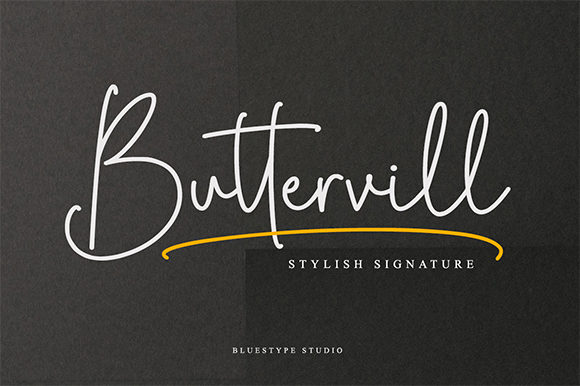
Exploring Buttervill: A Tool for Authentic Creative Texture
In the landscape of creative tools, where complexity often competes with simplicity, finding resources that serve a specific, well-defined purpose can be a significant advantage. Buttervill occupies a distinct niche within this ecosystem. It is a sweet and simple script designed to inject a particular kind of authenticity into creative projects. Its core proposition is straightforward: to provide users with an easily implementable method for adding nuanced, textural elements that feel organic and genuine, bypassing the need for intricate manual creation.
What Makes Buttervill Distinct
Unlike comprehensive suites or all-in-one creative platforms, Buttervill is fundamentally a focused utility. Its distinction lies in its narrow scope and deliberate lack of overarching features. The script generates data or patterns—often textual or symbolic—that mimic the kind of incidental, imperfect details found in real-world artifacts. Think of the faint, inconsistent script in a weathered letter, the idiosyncratic formatting of a local community bulletin, or the charming irregularities of a hand-drawn map’s legend. Buttervill automates the generation of these elements, offering them as ready-to-use components.
This approach contrasts with broader tools that might require you to build such authenticity from scratch using advanced effects or painstaking manual input. Buttervill provides a shortcut, but a shortcut of a particular kind: it doesn’t aim to create the entire artifact, only to supply one layer of its character. The output is typically lightweight, modular, and meant to be integrated into a larger work you are already building with other primary tools.
Evaluating the Strengths and Tradeoffs
Understanding where Buttervill excels, and where its limitations begin, is crucial for determining its fit for your project.
Core Strengths
Simplicity and Speed: The primary advantage is implementation speed. For creatives who value workflow efficiency, being able to drop in a pre-generated element that carries immediate authentic weight can save considerable time. There’s no need to study a complex manual or navigate a multifaceted interface.
Consistency in Authenticity: Buttervill can produce a coherent style of “imperfection” across a project. If you’re creating a series of documents or assets that need to share a common weathered or personal feel, the script can ensure that texture is applied uniformly, avoiding the inconsistency that might come from trying to manually replicate it each time.
Lightweight and Non-Destructive: As a script, it typically operates without embedding itself deeply into your core files. You can often apply its output as a separable layer or data set, allowing for easy adjustment or removal if the effect isn’t quite right. This makes it a low-commitment experiment.
Recognizable Tradeoffs and Limitations
Specificity of Output: The authenticity Buttervill provides is of a predefined type. It excels at certain styles of textual or pattern-based aging and irregularity. If your project requires a different kind of authentic texture—say, a specific historical engraving style or a very particular regional dialect formatting—the script may not be adaptable enough. It offers a dash of authenticity, but the flavor of that dash is fixed.
Dependency on a Larger Workflow: Buttervill is not a standalone creation tool. It requires you to have a primary environment—a text editor, a design application, a game engine—where you will integrate its output. Its value is entirely contextual. If you don’t already have a project underway or a capable host application, Buttervill alone will not be productive.
Potential for Overuse or Generic Feel: Like any preset or generator, if used without careful curation, its output could become recognizable and even generic across different projects. The “authenticity” could start to feel manufactured if applied too liberally or without customizing the surrounding elements. Its best use involves treating its output as a starting point for further personalization.
Comparing Approaches to Authentic Detail
When seeking to add authentic texture to a creative endeavor, several broader approaches exist. Placing Buttervill among these conceptual categories helps clarify its role.
One common approach is manual creation. This involves researching reference materials and painstakingly replicating details by hand. This method offers ultimate control and specificity. The resulting texture will be exactly what you envision. However, the tradeoff is immense time investment and a requirement for high skill levels. Buttervill sits opposite this, offering speed and ease but relinquishing fine-grained control over every detail.
Another approach is using comprehensive feature sets within major software. Many professional design, writing, or development applications have filters, effects, or asset libraries that can simulate aged or irregular textures. These are often highly customizable and integrated seamlessly into the workflow of that software. The comparison here is about focus. Buttervill does one thing, potentially very well, without requiring you to own or learn a full professional suite. However, if you already use such a suite and its texture tools are adequate, adding a separate script like Buttervill might introduce unnecessary complexity.
A third category is open-source or community-driven asset packs. These are collections of pre-made textures, fonts, or sound effects designed for creative use. Buttervill differs here in being a generator, not a collection. It creates new, pseudo-unique output each time, rather than offering a fixed set of assets. This can be beneficial for projects requiring variety without visible repetition, but it means you are relying on the algorithm’s taste rather than a curator’s selection.
Decision Factors: When Buttervill May Be the Right Fit
Choosing to incorporate Buttervill into your process depends on several project-specific factors.
- Project Scale and Timeline: For smaller to medium-scale projects, or those with tight timelines, the efficiency gain can be decisive. On a large, long-term project where every detail is meticulously planned, its preset nature might be less suitable.
- Your Primary Toolset: If your main creative software lacks robust texture-generation features, or if those features are overly complex for your needs, Buttervill acts as a capable, focused supplement. If your primary tools already excel in this area, duplication of effort is unlikely helpful.
- The Nature of the Authenticity Required: Analyze the specific “authentic” feel you need. Does it align with the kind of incidental, textual, or pattern-based irregularity Buttervill is known for? If yes, it’s a strong candidate. If your authenticity needs are more visual (e.g., grunge textures on surfaces), auditory, or based on highly structured data, other alternatives will be more appropriate.
- Your Comfort with Scripts and Integration: Success requires a basic willingness to implement a script and merge its output into your work. If your workflow is entirely within a closed, GUI-driven environment with no support for external inputs, integration might be challenging.
Realistic Use Case Examples
A game developer creating a narrative-driven indie title might use Buttervill to quickly generate the varied handwritten notes found throughout the game world, ensuring they feel unique but cohesive. A writer producing an interactive fiction piece could use it to format in-game documents with inconsistent typography, adding to the immersion. A designer working on a marketing campaign for a “craft” brand might integrate Buttervill’s output to style promotional materials with a hand-made, personal touch.
In each case, the user is not relying on Buttervill to build the entire asset. They are using their primary tools for the core design, writing, or coding, and employing Buttervill to efficiently apply a finishing layer of texture that elevates the work’s perceived authenticity.
When You Might Need Another Option
Despite its utility, Buttervill is clearly not a universal solution. There are situations where seeking a different tool or approach is advisable.
If the authentic detail you require is hyper-specific and research-based—for example, accurately replicating the typographic conventions of 18th-century French pamphlets—a specialized resource or manual recreation will be necessary. Buttervill’s generalized algorithm cannot match scholarly precision.
For projects where authenticity is the central creative mechanic, not a textural dash, a more foundational tool is needed. If your entire project is about exploring the feel of a specific historical medium, you likely need software or methods dedicated to simulating that medium at a deep level, not a script that adds surface character.
Finally, if your workflow is already optimized and seamless, introducing a new, external element might disrupt it. If you have a well-established method for achieving similar results using tools you master completely, the marginal gain from Buttervill might not justify altering your process.
In the end, evaluating Buttervill comes down to a balance between need for speed and scope of control. It serves creators who recognize the value of authentic texture but wish to allocate their primary time and skill to the broader creative vision, using a reliable, simple utility to handle a specific, repetitive detailing task. By understanding its focused nature, its comparative place among other methods, and its inherent tradeoffs, you can make a more informed decision about whether its particular brand of sweetness and simplicity will serve your next endeavor.