Playback: The Art of Scripting with Curves and Charm
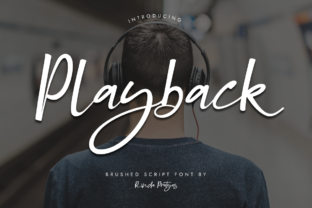
In the world of digital design and development, a script's aesthetic can often be as crucial as its functionality. While many frameworks prioritize efficiency and minimalism, there exists a compelling need for tools that also inspire visual creativity and bold expression. This is where the concept of Playback enters the conversation, not merely as a utility but as a stunning script characterized by its rich curves and captivating form.
The Visual Signature: Understanding Playback's Design Philosophy
At its core, Playback is defined by a distinct visual language. The term "rich curves" refers to the smooth, flowing lines and organic shapes that form the backbone of its script structure. Unlike angular, grid-based designs, these curves introduce a sense of motion, fluidity, and human touch into the code's presentation. For a developer or designer viewing the script, this can transform a routine task into a more engaging experience. The bold and charming look is not an accident; it is a deliberate choice to make the scripting environment itself a source of inspiration.
This approach challenges the conventional notion that code should be invisible or purely utilitarian. By embedding aesthetic principles into the script's very presentation, Playback suggests that the medium can enhance the message. Educators, for instance, might find that students are more drawn to learning scripting concepts when the examples are visually appealing. Hobbyists working on personal projects may feel a greater sense of connection to their work when the tools they use are pleasing to the eye.
Characteristics That Define the Experience
Several key characteristics emerge when working with or examining Playback. The most obvious is its visual density. The curves are not sparse; they are abundant and interwoven, creating a tapestry of code that feels alive. This does not equate to clutter, however. There is a careful balance where the richness contributes to readability by grouping logical structures through shape and flow, rather than solely through indentation or syntax.
Another characteristic is its contextual adaptability. The bold look isn't monolithic. Depending on the application—be it a data visualization script, an interactive web element generator, or an animation sequence—the curves can embody different tones. In a business analytics context, the curves might convey smooth, reliable trends. For a creative artist's project, the same curves could express whimsy and dynamism. This versatility makes it relevant across our broad audience, from researchers needing clear, elegant data scripts to business owners wanting to present internal tools with a polished, professional flair.
Practical Advantages in Real-World Application
Moving beyond its appearance, the advantages of Playback's design manifest in practical use. One significant benefit is enhanced cognitive engagement. The human brain responds positively to organic patterns and beauty. When a script is visually stimulating, it can reduce mental fatigue during long development sessions, improve pattern recognition, and aid in memory retention of code structures. This is particularly valuable for professionals who spend hours debugging or iterating.
A more tangible advantage lies in communication and collaboration. Scripts are often shared among teams, presented in reports, or used as teaching materials. A script with a bold, charming look, like Playback, acts as a better communication tool. Its visual clarity can make complex logic more approachable for non-technical stakeholders, such as a business owner reviewing a project's backbone, or a client seeing a prototype's underlying mechanism. It bridges the gap between pure functionality and understandable artistry.
Considerations and Implementation Insights
Adopting or utilizing a script with such a strong visual identity requires some consideration. The primary consideration is environment compatibility. Not all editors or rendering environments will display the rich curves with perfect fidelity. It's important to ensure that the chosen platform supports the graphical rendering needed to appreciate Playback's full character. Additionally, teams accustomed to very minimalist, text-only code might need a brief period of adjustment to this more graphical approach.
From an implementation perspective, integrating Playback often involves thinking about script output not just as process, but as presentation. For example, a creator building an interactive installation might use Playback to generate the control scripts, where the curves of the script itself are mirrored in the physical curves of the installation's design, creating a cohesive theme from code to final product. The implementation becomes part of the creative workflow, not a separate, hidden step.
Diverse Use Cases Across the Audience Spectrum
The applications for a script like Playback are as varied as its users. For professionals in software and web development, it can be employed in front-end scripting for unique UI behaviors, where the script's curves metaphorically represent smooth user interactions. Data scientists might use it to write scripts that generate reports where the data charts and the code that produced them share an aesthetic harmony.
Educators and researchers can leverage its charming look to create more engaging teaching materials. A lecture on algorithmic loops could use Playback examples where the looping structure is visualized through a literal curved, repeating line in the script, making the abstract concept concrete. Hobbyists, such as those in digital art or game modding, might find it the perfect tool for writing custom shaders or animation routines, where the script's beauty reflects in the beauty of the final rendered scene.
Even for business owners and managers with a less technical background, understanding that a project uses a script like Playback can be a point of quality and attention to detail. It signals that the development team values both form and function, which can translate to a more polished final product for customers.
Observations on Workflow Integration
Observations from various fields show that when Playback or scripts with similar principles are introduced, the workflow often evolves. The scripting phase becomes less of a purely logical, text-based task and more of a design-thinking exercise. Developers might sketch curve patterns before writing, aligning the script's visual flow with the program's operational flow. This can lead to more thoughtful, well-structured code because the visual representation forces a consideration of symmetry, balance, and connection—principles good for both aesthetics and logic.
It also encourages documentation within the script itself. The curves and bold forms can be used to visually segment comments, demarcate modules, or highlight critical functions, making the code inherently more self-explanatory. This reduces the need for separate, lengthy documentation files and keeps the explanation integrated with the tool.
The Broader Trend: Where Playback Fits In
Playback is part of a broader, evolving trend in technology that seeks to humanize digital tools. We are seeing a move away from stark, purely functional interfaces towards ones that engage our senses and emotions. This script, with its emphasis on rich curves and a charming look, aligns perfectly with that movement. It acknowledges that the people using these tools—whether professionals, creators, or hobbyists—are not just logic processors; they are visual beings who appreciate beauty and are inspired by it.
This trend is evident in everything from consumer apps to professional software. Playback applies it at the foundational level of scripting, which is a profound step. It suggests that even the most basic building blocks of our digital world can carry an artistic signature. For the future, we might see more tools that follow this path, where the elegance of the tool directly contributes to the elegance of the outcome, creating a more holistic and satisfying creative and technical process for everyone involved.
In conclusion, while many scripts serve their purpose quietly, Playback stands out by declaring that purpose with style. Its rich curves and bold, charming look offer practical benefits in engagement, communication, and workflow integration across a vast spectrum of users. It transforms scripting from a behind-the-scenes task into an integral, visible part of the creative and technical journey, proving that in the digital realm, form and function can beautifully coexist.