The Living Signature: A Script Typeface That Elevates Authentic Design
In a digital world saturated with polished, geometric, and often impersonal fonts, the pursuit of authenticity becomes a central creative challenge. How can a design project, a brand identity, or a personal creation communicate warmth, humanity, and individuality at its very foundation? One answer lies not in imagery or color, but in the often overlooked element of typography. Specifically, in the choice of a typeface that carries within its forms the unmistakable trace of human hands. This is where script fonts like Signed enter the stage, not as mere decorative flourishes, but as powerful tools for imbuing work with a resonant, personal touch.
The Essence of a Handwritten Script
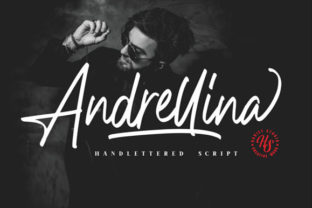
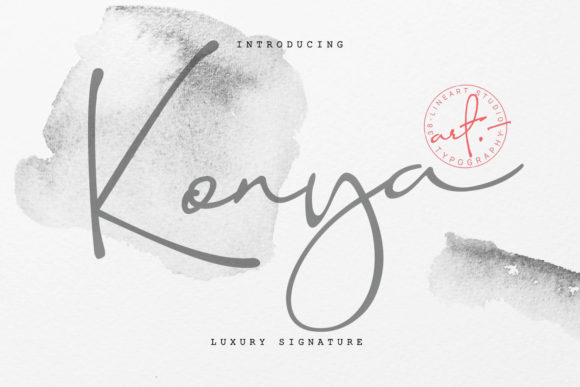
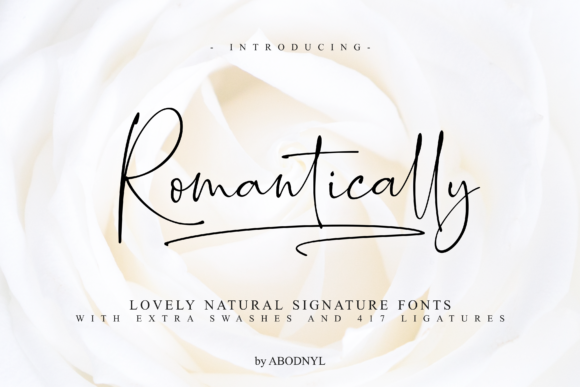
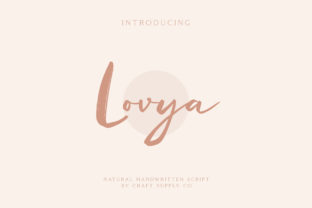
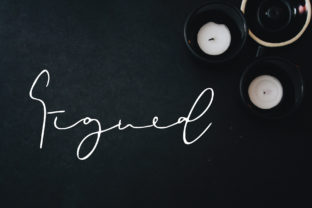
A truly authentic script typeface does not merely mimic handwriting; it captures its spirit. It retains the natural irregularities, the rhythmic flow, and the subtle imperfections that are inherent to writing with a pen, brush, or marker. These characteristics are what make a script like Signed feel alive. Unlike many digital fonts that prioritize uniformity and mechanical precision, an authentic script radiates life through its variable stroke weights, organic letter connections, and character-specific details. It avoids the feeling of a rigid, computer-generated template, offering instead the warmth of a personal note or a crafted signature.
This authenticity stems from a deep understanding of calligraphic principles and real handwriting patterns. The letters in Signed are designed to interact with each other naturally, as they would in true cursive writing. The ascenders and descenders have a graceful flow, the spacing feels intuitive rather than mathematically enforced, and the overall rhythm encourages readability while maintaining artistic expression. It is this balance between artistic flair and functional clarity that sets a high-quality script apart from purely ornamental or novelty typefaces.
Key Characteristics of an Authentic Script
When evaluating a script font for its authenticity and versatility, several tangible characteristics become evident. Firstly, look for dynamic stroke contrast. The lines should not be monotonous; they should swell and taper, reflecting the pressure and movement of a writing tool. Secondly, contextual alternates are crucial. In real handwriting, the same letter can look slightly different depending on what letter comes before or after it. A sophisticated script like Signed often includes these alternates to prevent repetitive, robotic-looking text.
Another important feature is natural ligatures. These are the joined connections between specific letter pairs (like 'th' or 'ea') that happen effortlessly in cursive writing. Incorporating them into the font design enhances fluidity and cohesion. Finally, a robust script will include a range of supporting glyphs—not just the basic alphabet, but also multiple punctuation styles, numerals that harmonize with the letters, and sometimes even stylistic sets for different moods (a more formal vs. a more casual look). These elements ensure the typeface can be used in comprehensive design projects without breaking its stylistic integrity.
Practical Applications Across Diverse Fields
The utility of an authentic script extends far beyond wedding invitations or logo badges. Its ability to add a personal touch makes it a compelling choice for a wide spectrum of professionals and creators.
Branding and Identity Design
For businesses, especially those in lifestyle, crafts, hospitality, or personal services, a script can be the cornerstone of a relatable brand identity. It can be used for logo text, taglines, or on packaging to evoke craftsmanship, care, or a bespoke experience. A font like Signed allows a brand to signal authenticity without resorting to clichés. It’s particularly effective for brands that want to stand apart from competitors using stark, minimalist sans-serifs.
Digital Content and User Interfaces
In digital spaces, a touch of humanity can greatly enhance user engagement. Using an authentic script for key headings, call-out quotes, or navigation elements in a blog, app, or website can create a more inviting and memorable experience. It breaks the cold, transactional feel of many interfaces. Educators and researchers might use it in presentation materials or educational websites to add a welcoming, approachable tone to complex information.
Personal Projects and Artistic Work
For hobbyists, artists, and individual creators, a script font is a direct channel for personal expression. It can be used in custom stationery, journal design, art prints, social media graphics, or personalized gifts. The feeling it imparts—that the work was touched by a human hand—is invaluable. It transforms standard digital text into something that feels curated and intentional.
Editorial and Publication Design
In magazines, books, or online publications, script typefaces are often employed for pull quotes, chapter titles, or bylines. They add a layer of editorial voice and personality. When used sparingly and purposefully, as with Signed, they can guide the reader’s emotional response without overpowering the body text.
Integrating Scripts into a Design Workflow
Successfully implementing an authentic script requires thoughtful consideration. It is a potent ingredient, but like any strong flavor, it must be used with balance and purpose.
The primary rule is moderation and hierarchy. Script fonts are best used for emphasis, titles, short phrases, or names. They are typically not suitable for large blocks of body text, as their decorative nature can hinder reading speed and comprehension over long distances. Pairing is therefore essential. A script like Signed often works beautifully when contrasted with a clean, neutral sans-serif or serif font for paragraphs and supporting information. This pairing creates a clear visual hierarchy: the script attracts attention and conveys mood, while the paired font ensures effortless readability.
Attention to technical implementation is also key. To truly leverage the authenticity of a script, designers should explore and use its OpenType features if available. This means activating ligatures, contextual alternates, and stylistic sets in their design software (like Adobe Illustrator, InDesign, or even CSS for web use). This unlocks the font’s full potential, making the text look genuinely handwritten rather than simply "font-like." Furthermore, considering color and background is important. Scripts often benefit from generous spacing and a background that doesn’t compete with their intricate forms.
Observations on Trends and Perception
The use of script typography often reflects broader cultural and design trends. In recent years, as audiences have grown weary of overly corporate and sterile digital aesthetics, there has been a marked resurgence in design elements that signal humanity and trust. This includes the use of handmade imagery, organic textures, and—significantly—authentic typography. A well-chosen script font acts as a visual shorthand for these values.
It’s also worth observing that the perception of scripts has evolved. While once they might have been seen as purely "feminine" or "traditional," contemporary script designs like Signed often possess a versatility that transcends such narrow categorizations. They can convey elegance, energy, creativity, or reliability depending on their context, weight, and pairing. This makes them a flexible tool in the modern designer’s palette, capable of addressing a broad audience from professionals to consumers.
Final Considerations for Selection and Use
Choosing an authentic script is an investment in the emotional texture of your work. When evaluating options, look beyond the immediate aesthetic. Consider the font’s technical depth—does it have the features that allow for natural variation? Examine its language support and character set—will it cover all your needs? Read the documentation to understand its intended use and the designer’s vision.
Remember that the goal is to enhance communication, not to decorate arbitrarily. The script should serve the message. An authentic script typeface, by its very nature, invites a slower, more appreciative reading. It asks the viewer to feel the text as much as read it. In projects where building connection, trust, or a unique personality is paramount, this quality is not just stylistic; it is strategic. Whether you are a business owner crafting a new brand, a educator designing a compelling resource, or a hobbyist creating a personal project, integrating a font with the genuine character of Signed can be the decisive touch that makes your work resonate on a profoundly human level.