The Lusya Calligraphy Script: An Evaluation of Its Design and Applications
The Lusya calligraphy script represents a specific and distinct approach to modern handwritten typography. It is defined by an elegant aesthetic that blends a natural, flowing handwritten style with contemporary design sensibilities. This article provides an objective evaluation of the Lusya script, examining its characteristics, potential uses, and key considerations for individuals or businesses seeking a typographic asset for their projects.
Understanding the Lusya Script's Core Design
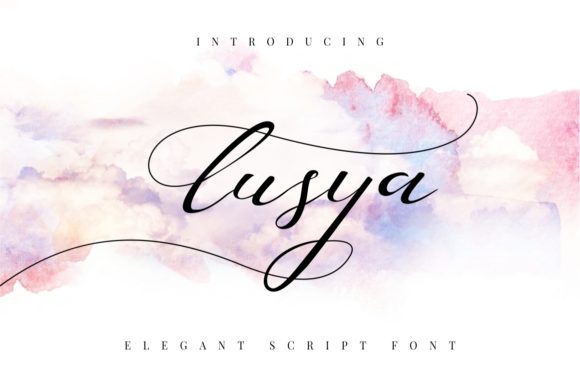
In typographic terms, Lusya is classified as a calligraphy or lettering script. Its primary design goal is to emulate the nuanced variations of skilled hand-lettering while maintaining digital usability. The letterforms typically exhibit a graceful, connected flow, with deliberate variations in stroke weight and subtle organic imperfections that contribute to its natural feel. The "modern" aspect of its design suggests a refinement of traditional calligraphic rules, often resulting in cleaner lines and a balance between classic elegance and present-day visual trends. This makes Lusya distinct from both rigid, geometric fonts and from highly ornate, historical calligraphy styles.
Why Consider the Lusya Script?
Individuals and designers might evaluate the Lusya calligraphy script for several practical reasons. A primary motivation is the need for typography that conveys a personal, crafted, or high-quality tone. In digital and print environments where communication can feel impersonal, a script like Lusya can introduce warmth and human touch. Furthermore, its versatility across a listed range of applications—from printed materials to digital headers—makes it a candidate for a cohesive visual identity. It is often explored for projects where standard typefaces fail to evoke the desired emotional response or uniqueness.
Potential Benefits and Advantages
When appropriately applied, the Lusya script can offer certain benefits. Its inherent elegance can elevate the perceived value of a product or event, such as in luxury branding or wedding stationery. The handwritten style can foster a sense of direct connection and authenticity, which is valuable for brands emphasizing artisan quality or personal service. From a practical design standpoint, a well-crafted script can serve as a versatile central element in a branding system, adaptable across different mediums while maintaining recognizability.
Trade-offs and Important Considerations
Employing a script like Lusya involves notable trade-offs. The foremost consideration is legibility. Compared to standard sans-serif or serif typefaces, connected scripts can be challenging to read at small sizes or in long paragraphs. This limits its effective use to headlines, short phrases, or decorative elements. Another consideration is stylistic alignment. The elegant and natural feel of Lusya may conflict with brands or projects requiring a stark, technical, or ultra-modern aesthetic. Furthermore, overuse of such a distinctive script can lead to a cluttered or overly decorative design, diminishing its impact.
Technical implementation also requires attention. To preserve its quality, the Lusya script may require high-resolution printing for physical materials and careful rasterization for web use. Licensing and usage rights for the font file must be clearly understood, as with any professional typeface.
Situations Where Lusya May Be a Strong Fit
The Lusya calligraphy script can be a compelling choice in specific scenarios. It is frequently a strong fit for personal and life event materials, such as wedding invitations, anniversary announcements, or personalized greeting cards, where elegance and personal touch are paramount. In commercial design, it may align well with brands in niches like boutique cosmetics, specialty foods, craft beverages, or high-end fashion—sectors where artistry and quality are key marketing messages.
For digital use, Lusya could effectively serve as a logo lockup, a recurring header graphic on a website for a compatible brand, or in social media graphics designed for campaigns emphasizing celebration, refinement, or handmade ethos. Its application on product packaging for limited-edition or premium items can also enhance the unboxing experience and perceived product value.
When to Consider Alternatives
Despite its strengths, alternatives to the Lusya script should be evaluated in many common situations. For body text requiring extensive reading, such as website articles, product manuals, or lengthy booklets, standard, highly legible typefaces are indispensable. Brands with a core identity built around minimalism, robustness, or technical innovation might find a sleek sans-serif or a utilitarian monospace font more conceptually aligned.
Projects with significant multi-language requirements or needing extensive typographic hierarchy (with many levels of headings and text) might benefit from a more comprehensive font family with multiple weights and styles. Furthermore, if the project budget or technical constraints limit the use of high-quality print or large-resolution displays, a simpler typeface might yield more reliable and consistent results across all intended mediums.
Practical Decision-Making Insights
To determine if the Lusya calligraphy script aligns with your goals, conduct a structured evaluation. First, clearly define the emotional tone and functional requirements of your project. Does "elegant" and "natural" support your message? Next, audit the practical contexts where the typeface will be used. Create a list of all applications—logo, signage, web headers, product labels, lengthy text—and assess if Lusya can perform adequately in each, or if it will be relegated to a limited, decorative role.
Compare Lusya directly with a few other typeface options. Test them in mock-ups for your key applications, focusing on legibility and aesthetic harmony with other design elements. Consider the long-term use: if this is for a brand, will this script still feel appropriate in several years? Finally, review the technical and licensing specifications of the Lusya font to ensure they meet your distribution and production needs.
Final Evaluation Summary
The Lusya calligraphy script is a specialized typographic tool designed to inject elegance and a handwritten personality into design work. Its value is maximized when used strategically for short, impactful text in contexts that celebrate quality, personalization, and artistry. Success with Lusya depends on recognizing its limitations in legibility and its specific stylistic voice, pairing it judiciously with more neutral typefaces for other textual needs, and applying it only where the production quality can match its refined design. By weighing these factors against your project's concrete demands, you can make an informed decision on whether the Lusya script is a suitable component of your visual communication.