The Natural Elegance of Hamuna: Why This Script Font Resonates with Modern Creators
In the digital age, the quest for authenticity and natural expression permeates every aspect of creative work. From branding to personal projects, there is a growing desire for tools that feel less like rigid software outputs and more like human craft. This is where the Hamuna script font finds its powerful relevance. It is not merely another typeface added to a library; it is a response to a nuanced shift in how professionals, entrepreneurs, and creators communicate visually.
Hamuna Defined: Casual Elegance with Intentional Design
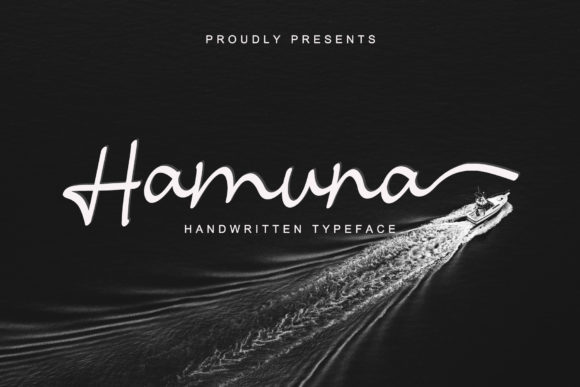
Hamuna is a simple, casual, and elegant script typeface characterized by its natural-looking ligatures and beautiful swashes. It eschews the overly formal or theatrical qualities often associated with script fonts, opting instead for a flow that feels organic and approachable. The ligatures—the connections between letters—are designed to mimic the natural rhythm of handwriting, avoiding awkward jumps or forced joins. The swashes, those decorative extensions on certain characters, are applied with restraint, offering a touch of flair without overwhelming the core message. This balance makes Hamuna exceptionally versatile: perfect for logos seeking a personal touch, posters that require both impact and warmth, social media posts that need to stand out in a feed, signatures that convey professionalism, and much more.
Fitting into the Current Creative Landscape
The appeal of Hamuna is deeply connected to several converging trends in design, business, and technology.
The Rise of the "Human" Brand
Consumers and clients increasingly gravitate towards brands that exhibit authenticity. In response, businesses, especially startups and ventures led by entrepreneurs and freelancers, are moving away from cold, corporate aesthetics. A logo crafted with Hamuna can instantly suggest a personal story, a craftsman’s attention, or a boutique service. It aligns with the movement towards branding that feels handmade and trustworthy, rather than mass-produced. This is a direct answer to changing consumer expectations, where connection and story often outweigh sheer scale.
The Demand for Versatility in Digital Workflows
Modern creators operate across a multitude of platforms and mediums—from a quick Instagram graphic to a detailed presentation deck. Their workflow demands fonts that can adapt seamlessly. Hamuna’s inherent simplicity ensures it remains legible on small mobile screens, while its elegant details provide enough sophistication for larger print or video formats. This adaptability is crucial. It means a marketer can maintain a consistent visual voice across a campaign, from a social media post to an event poster, without switching typefaces and fragmenting the brand identity.
The Blurring Lines Between Professional and Personal Expression
For freelancers, influencers, and solo entrepreneurs, their professional identity is often intertwined with their personal passion. A font like Hamuna serves this duality beautifully. It can elevate a business card with elegant professionalism, yet also feel perfectly suited for a personal blog header or a creative project announcement. This reflects a broader lifestyle trend where work is not a separate entity, but an integrated part of a creative life. Tools that support this integration, like a versatile and expressive typeface, become essential.
Why Hamuna is Garnering Attention
Beyond its aesthetic qualities, Hamuna is gaining traction because it solves practical problems with stylistic intelligence.
- It Offers Distinction Without Complexity: In a marketplace saturated with bold, geometric sans-serifs and overly decorative scripts, Hamuna provides a clear middle path. It is distinctive enough to capture attention but remains clean and readable. For a logo, this means memorability without sacrifice of clarity.
- It Supports the Need for Speed and Quality: Creators often work under tight deadlines. Hamuna, with its ready-made elegance, allows for quick implementation that still looks considered and high-quality. A social media post using Hamuna for a quote overlay can be produced rapidly but carries the weight of deliberate design.
- It Aligns with the Technology of Accessibility: As font rendering improves across browsers and devices, the finer details of ligatures and swashes are displayed more reliably. This technical progress makes using a font like Hamuna a more viable and consistent choice than it might have been in the past, encouraging its adoption.
Practical Applications and Observations
To understand Hamuna’s utility, consider these concrete scenarios:
- Logo Design for a Craft Business: A small business selling handmade pottery uses Hamuna for its wordmark. The natural ligatures between letters subtly echo the fluid, organic shapes of the ceramics, creating a cohesive brand story before a customer even sees a product.
- Social Media Campaign for a Lifestyle Brand: A fitness coach aiming to promote a holistic, personalized approach uses Hamuna in graphics that share motivational quotes. The casual elegance of the font reinforces the message of balanced, attainable wellness, contrasting sharply with the aggressive, blocky fonts often used in the industry.
- Presentation Design for a Freelancer: A graphic designer pitching to a client uses Hamuna sparingly in slide headers. It immediately sets a tone of creative expertise and personal attention, differentiating the pitch from those using standard corporate presentation templates.
- Wedding Invitation Suite: While not strictly a professional use, this example highlights the font’s emotional range. Hamuna provides the warmth and personal touch desired for such an event, demonstrating its capacity to convey feeling—a quality that professionals often need to inject into commercial projects.
Connecting to Larger Developments
The relevance of Hamuna is part of a larger narrative in design and communication. We are witnessing a pendulum swing back towards forms that reference human touch, perhaps in reaction to an era dominated by stark digital interfaces. This is evident in wider trends: the popularity of organic shapes in UI design, the use of hand-drawn illustrations in tech company branding, and the resurgence of analog aesthetics in photography. Hamuna sits comfortably within this movement. It is a digital tool that helps recreate the imperfections, flow, and beauty of analog creation. Furthermore, as artificial intelligence begins to automate more design tasks, the choice of a font like Hamuna becomes a deliberate human decision—a selection of character and mood that a machine might not intuitively grasp. It becomes a point of human curation in an increasingly automated workflow.
The Importance of Contextual Choice
Ultimately, the intelligent use of Hamuna hinges on understanding context. It is not a font for every situation. Its power is unlocked when the project demands a blend of professionalism and personality, when the message requires a whisper of elegance rather than a shout, or when the brand story is fundamentally about people and process. For the modern professional—whether a marketer building a brand, an entrepreneur crafting an identity, or a freelancer showcasing their portfolio—these contexts are increasingly common. Having a tool like Hamuna readily available means having the ability to meet those nuanced needs effectively.
In conclusion, Hamuna represents more than just a stylistic option. It is a thoughtful response to the evolving needs of a diverse creative economy. It provides a bridge between the desire for natural, human-centric expression and the practical demands of fast-paced, multi-platform digital work. By combining casual simplicity with elegant detail, it empowers professionals to communicate with both authenticity and impact, making it a quietly significant asset in the contemporary toolkit of design.