Talitha: The Elegant Script for Strategic Expression
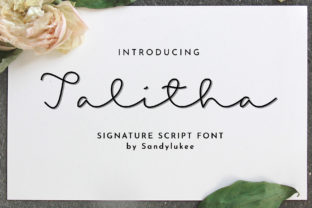
In the vast digital landscape, communication is often dominated by uniformity. Standard fonts and templated designs serve a functional purpose, but they frequently lack the soul and subtle persuasion necessary for meaningful connection. This is where the strategic application of a font like Talitha enters the equation. Talitha is a simple, yet sweet monoline script that will add a uniquely romantic spin on any message. It's more than just a decorative typeface; it's a tool for intentional, emotional communication that can support specific goals and elevate your digital presence when used with purpose.
The Strategic Value of a Romantic Script
Before considering any design element, a strategic mindset asks: what outcome does this support? Talitha isn't a font for your quarterly report's body text. Its utility lies in its ability to signal warmth, authenticity, and personal attention. For entrepreneurs, marketers, creators, and professionals, every visual choice is a communication choice. Using Talitha strategically can enhance customer experience, reinforce brand personality, and create memorable touchpoints that generic fonts cannot. Its monoline simplicity ensures legibility, while its inherent sweetness injects a controlled dose of emotion into otherwise sterile digital environments.
Consider your brand's touchpoints: a handwritten thank-you note in an email signature, a personalized quote on a website banner, a special offer headline in a social media post. In these instances, Talitha acts as a visual whisper, a subtle cue that the communication is thoughtful and human-centric. This aligns directly with goals centered on building trust, enhancing perceived value, and differentiating your message in a crowded market.
Integrating Talitha into Your Planning and Positioning
Intentional use begins with planning. Randomly sprinkling Talitha across all communications dilutes its power and can appear inconsistent. Instead, map its application against your communication strategy. Identify key moments where emotional resonance is a primary objective.
- Brand Positioning: For brands built on intimacy, craftsmanship, or personal service (e.g., boutique retailers, freelance creatives, wellness coaches), Talitha can visually underscore that positioning. Using it for logo accents, packaging mockup text, or website section headers creates a cohesive, feeling-led brand language.
- Customer Journey Touchpoints: Plan to use Talitha at high-emotion points in the customer experience. The welcome message after a purchase, the headline on a "About Us" page telling your story, or the subject line in a personalized follow-up email. This planned application makes the experience feel curated.
- Content Strategy: Bloggers and publishers can use Talitha to visually flag content that is reflective, personal, or inspirational. Using it for pull-quotes within a longer article or for the titles of opinion pieces can set the tonal expectation for the reader before they even begin reading.
The key is to treat Talitha as a specialized tool in your kit, not the default. Its romantic spin is a specific effect, to be deployed with specific intent.
Practical Applications and Creative Enhancement
Moving from theory to practice, let's explore realistic use cases where Talitha supports better results.
For a small business owner, using Talitha in the headline of a "Our Story" webpage immediately frames the narrative as personal and heartfelt, potentially increasing engagement time. An educator creating online course materials might use Talitha for key inspirational mantras or module introductions to soften the learning interface and foster a more supportive environment. A freelancer could use it in their invoice headers or proposal covers to add a touch of elegant personalization that distinguishes their documents from corporate, automated templates.
In marketing campaigns, Talitha's strength lies in contrast. A clean, sans-serif font for body copy and data, paired with Talitha for the campaign's core emotional hook or call-to-action button text, creates a dynamic that guides the viewer's emotional response. This thoughtful pairing supports communication goals by structuring the viewer's journey from rational understanding to emotional engagement.
Decision-Making: When and How to Use Talitha
Choosing to use Talitha requires a few strategic considerations. First, assess context and audience. A highly technical whitepaper for engineers is not the context. A newsletter for a creative community or a launch announcement for a lifestyle product is. The audience must be receptive to the emotional cue.
Second, consider scalability and consistency. If you use Talitha for a tagline, ensure it renders legibly across all devices and mediums. Test it in email clients, on mobile screens, and in print mockups. A beautiful font that fails technically undermines the goal of enhanced experience.
Third, pair it strategically. Talitha rarely works as a standalone font family for all text. Its power is amplified when contrasted with a strong, neutral supporting font for paragraphs and functional information. This creates visual hierarchy and prevents the "romantic spin" from overwhelming the message's substance.
Finally, limit its scope. Decide on one or two consistent applications—perhaps all your section headers and your signature—and stick to that plan. This disciplined approach ensures Talitha reinforces your identity without becoming a distracting gimmick.
The Risks of Unconsidered Application
Using Talitha without clear goals or context carries several risks. The most significant is brand misalignment. If your core messaging is about robust efficiency and cutting-edge technology, a romantic script introduces a confusing visual dissonance that can erode trust. Another risk is perceived inauthenticity. Overusing a script font on every piece of communication, especially automated ones, can feel like a cheap trick, making the personal touch seem fake.
Operationally, poor technical implementation—such as using it for long body text blocks—can harm readability and accessibility, negatively impacting customer experience and learning outcomes. The goal is to enhance, not hinder. Therefore, reliance on Talitha should always be secondary to the primary goals of clear communication and functional design.
Cultivating Long-Term Value Through Intentional Design
The long-term value of any design choice, including the use of Talitha, is cumulative consistency. When applied intentionally at planned moments over months and years, Talitha becomes a recognizable part of your brand's emotional signature. Customers and audiences begin to associate that elegant, personal touch with your voice.
For long-term results, integrate Talitha into your style guide with explicit rules. Define its exact use cases, approved pairings, sizing, and color specifications. This turns a creative impulse into a strategic asset. It ensures that every team member or future collaborator can apply it correctly, maintaining the cohesive brand experience that builds lasting recognition and loyalty.
Ultimately, Talitha is a subtle tool for those who understand that communication is multidimensional. Its simple, sweet monoline form offers a way to embed a feeling into a message. By using it not randomly, but as a considered element in your strategic planning for branding, customer experience, and creative communication, you elevate your digital presence from merely informative to genuinely expressive. It’s a reminder that in a world of default settings, intentional choices—even in the shape of your letters—can drive better outcomes.